T
TYou're standing at the edge of a 200-foot waterfall. Below you, white water hammers into a turquoise pool framed by jungle walls so green they almost glow. Your harness is tight. The guide clips your figure-eight descender to the rope, checks your brakes, and gives you a nod. You lean back into the void, step off the rock, and begin your descent — straight through a curtain of falling water, the cold spray exploding against your helmet, the roar so loud it swallows your own scream.
Then silence. Your feet touch the pool. You unclip. You look up at the waterfall you just came down. And you realize you've just done something most people only see in adventure movies.
That's canyoning in Costa Rica — and it's one of the most exhilarating, immersive, and underrated adventure activities on Earth. Combining waterfall rappelling, cliff jumping, swimming, hiking, and sometimes ziplining, canyoning takes you deep into places that no trail, road, or boat can reach. And Costa Rica, with its volcanic terrain, year-round tropical waterfalls, and world-class operators, is one of the best places on the planet to experience it.
This guide covers everything you need to know: the best canyoning sites, the top operators compared side by side, real prices, what to expect, what to wear, and how to book. Let's drop in.
- Why Costa Rica for Canyoning
- Best Canyoning Experiences
- Lost Canyon, La Fortuna (Desafio)
- Maquique Adventure, La Fortuna
- Pure Trek Canyoning, La Fortuna
- Canyoning in Monteverde
- Hidden Gems Beyond La Fortuna
- Operators Compared
- How Much Does Canyoning Cost
- Best Time of Year
- What to Expect — A Typical Day
- What to Bring / What to Wear
- Safety Tips
- How to Book
- FAQ
Why Costa Rica is One of the Best Places in the World for Canyoning
Costa Rica didn't become a canyoning hotspot by accident. Several factors converge to make this small Central American country one of the premier destinations for the sport worldwide.
Volcanic terrain built for canyons
Costa Rica sits on the Pacific Ring of Fire, and its volcanic geology has carved deep, dramatic canyons throughout the central highlands. The Arenal region alone features dozens of waterfalls plunging from volcanic ridges into narrow gorges — natural obstacle courses that seem purpose-built for rappelling, jumping, and swimming. The rock is solid enough to anchor safely but textured enough to grip with your feet during descents.
Year-round tropical waterfalls
Unlike seasonal canyoning destinations in Europe or North America where routes dry up in summer, Costa Rica's tropical rainfall keeps waterfalls flowing 365 days a year. The green season (May-November) brings higher water volumes and more dramatic falls. The dry season (December-April) offers easier conditions with better weather. Either way, the canyons are always running.
World-class operators and safety standards
La Fortuna, the epicenter of Costa Rica canyoning, is home to multiple operators with decades of experience. Companies like Pure Trek (operating since 2001) employ guides certified by Costa Rica's National Academy for Guides (INA) and use equipment that meets international safety standards. The competition between operators has raised the bar across the board.
Accessibility for all levels
What makes Costa Rica canyoning particularly appealing is its range. You can find tours welcoming children as young as 5 years old alongside routes that challenge experienced adventurers with 200-foot waterfall rappels. There's a canyon for every level of ambition.
Best Canyoning Experiences in Costa Rica
Lost Canyon, La Fortuna — The World-Class Standard (Desafio Adventure Company)
If canyoning in Costa Rica has a flagship experience, it's the Lost Canyon — and the operator that put it on the map is Desafio Adventure Company. Consistently rated among the best canyoning experiences in the world, the Lost Canyon delivers a progression of rappels, swims, and jungle hikes that culminates in the big one: a 200-foot (60-meter) waterfall rappel that is, without exaggeration, one of the most thrilling things you can do in Costa Rica.
The canyon is nestled in the volcanic foothills east of La Fortuna, accessible only on foot through dense rainforest. You start with smaller warm-up rappels that teach you the rope technique and build your confidence. Then the walls close in, the waterfalls get bigger, and the pools get deeper. The main event — the 200-foot descent through the full force of the waterfall — is a sensory overload: cold water hammering your helmet, rope sliding through your gloves, the rock face slippery under your feet, and the roar so loud that the guide's voice at the top is just a distant echo.
Between rappels, you swim through turquoise pools, hike through narrow jungle corridors, and occasionally spot toucans, sloths, and morpho butterflies in the canopy above.
Book the 7:00 AM slot. Fewer groups in the canyon, cooler temperatures, and the morning light filtering through the canopy creates a magical atmosphere — especially at the base of the big waterfall. During peak season (December-April), this slot fills up days in advance.
Prices as of April 2026. Prices may vary by season and operator.
Maquique Adventure, La Fortuna — Best Value with Ziplines
If you want a canyoning experience that adds ziplining to the mix — and includes free photos — Maquique Adventure offers arguably the best overall value in the La Fortuna canyoning scene. Their canyon, located in the small village of El Burrito (about 18 minutes from La Fortuna), combines five waterfall rappels with two ziplines, giving you two adventure disciplines in a single outing.
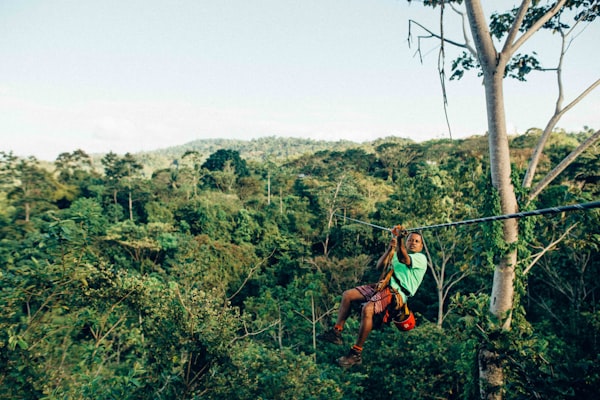
The rappels range from 19 meters to 60 meters in height, with the grand finale being a stunning 60-meter (197-foot) waterfall descent. Three of the five rappels take you directly through waterfalls. Between the rappels, two ziplines — 160 meters and 400 meters long — carry you over the jungle canopy, adding speed and flight to the mix.
What sets Maquique apart is the value proposition: the $105 price includes transportation, all equipment, a bilingual guide, an authentic Costa Rican lunch, AND professional photos — those photos are usually a $20-40 add-on with other operators.
Maquique is the best choice if you're traveling with a group that has mixed comfort levels. The progression from smaller rappels to the big 60-meter finale is well-paced, and the ziplines between rappels give nervous participants a confidence boost. Plus, the included photos mean nobody has to worry about managing a camera in the canyon.
Pure Trek Canyoning, La Fortuna — The Family-Friendly Pioneer
Pure Trek is the original canyoning operator in La Fortuna, running tours since 2001 — longer than anyone else in the region. Their quarter-century of experience shows in every detail: the guide training, the equipment maintenance, the pacing of the tour, and especially their ability to make the experience accessible to a remarkably wide range of participants, from 5-year-olds to seniors.
The Pure Trek route features four rappels — three waterfalls and one rock wall — with heights ranging from 40 to 165 feet (12 to 50 meters). The crown jewel is the 165-foot (50-meter) waterfall rappel, which sends you straight through the cascade. But the experience that gets the most cheers is the Monkey Drop: a short zipline that ends in a freefall plunge into a refreshing pool below. Guides can control the drop speed for nervous participants or young children.
Pure Trek's guides are all certified by the National Academy for Guides (INA) — Costa Rica's official guiding certification body.
If you're traveling with kids under 8, Pure Trek is your operator — no other company in La Fortuna offers the same level of family accommodation. The guide-controlled descent system means even a 5-year-old can safely rappel a waterfall. For experienced adults who want more intensity, ask about the Rainforest Falls option at $142.
Canyoning in Monteverde — Cloud Forest Waterfalls
La Fortuna dominates the canyoning conversation, but Monteverde offers a compelling alternative — especially if you're already in the area for ziplining or the cloud forest reserve. Instead of volcanic canyon walls and turquoise pools, you're descending through a misty cloud forest where moss and orchids cling to every surface, rare birds dart through the canopy, and the waterfalls emerge from fog like something out of a fantasy novel.
The main operator, Finca Modelo, runs a route featuring six waterfall rappels, with the tallest measuring 131 feet (40 meters). The tour begins with a short rainforest hike where the guide points out birds and rare plant species. The atmosphere is distinctly different from La Fortuna — cooler, mistier, and more intimate.
Monteverde canyoning is cooler and wetter than La Fortuna — the cloud forest lives up to its name. Wear a long-sleeve rash guard under your quick-dry clothes for warmth between rappels. If you're choosing between La Fortuna and Monteverde: La Fortuna wins on intensity and waterfall height, Monteverde wins on atmosphere and value ($76 vs. $105-115).
Beyond La Fortuna and Monteverde — Hidden Gems
While La Fortuna and Monteverde get most of the attention, several other locations offer excellent canyoning:
Hacienda Guachipelin — Rincón de la Vieja
Located at the base of Rincón de la Vieja Volcano in Guanacaste, this tour combines three waterfall rappels with a Tarzan Swing across the canyon. Shorter (1.5-2 hours) but packs a punch. The volcanic landscape adds a different visual dimension — sulfur-tinged rock, tropical dry forest, and hot springs nearby.
- Price: From $80
- Duration: 1.5-2 hours
- Min. age: 10
- Combo option: Bundle with zipline and tubing via One-Day Adventure Pass
Río Perdido — Guanacaste
A resort-based canyoning experience near Rincón de la Vieja. Rappelling, swimming, and jumping through a scenic white-rock canyon carved by a thermal river. The unusual pale volcanic rock formations give it a look unlike anywhere else in Costa Rica.
Bajos del Toro — Near San Jose
For travelers with limited time who can't make it to La Fortuna, the canyons near Bajos del Toro (~90 minutes from San Jose) offer a respectable canyoning experience through waterfalls and pools in the central volcanic highlands.
These alternatives work best as add-ons to a broader adventure itinerary — they complement, rather than replace, the flagship La Fortuna experience.
La Fortuna Canyoning Operators Compared
| Feature | Desafio (Lost Canyon) | Maquique | Pure Trek |
|---|---|---|---|
| Price | $108 + tax | $105 | ~$115 (incl. tax) |
| Duration | 5 hours | 4.5 hours | 4-4.5 hours |
| Tallest waterfall | 200 ft (60m) | 197 ft (60m) | 165 ft (50m) |
| Ziplines | No | Yes (2: 160m + 400m) | No (Monkey Drop) |
| Min. age | 8 years | 5 years | 5 years |
| Photos included | No (extra) | Yes (free) | No (purchase) |
| Lunch | Yes | Yes | Yes |
| Transport | Yes | Yes | Yes |
| Operating since | 2000s | Recent | 2001 |
| Guide cert. | Professional | Professional bilingual | INA certified |
| Best for | Max adrenaline | Best value / combos | Families / kids |
Which should you choose?
- Want the biggest adrenaline hit? → Desafio (Lost Canyon). The 200-foot waterfall is the marquee experience.
- Want the best value? → Maquique Adventure. $105 with ziplines, lunch, AND free photos.
- Traveling with young kids (5+)? → Pure Trek. 24 years of experience and guide-controlled descents.
- Want something different? → Pure Trek's Rainforest Falls ($142) for a more advanced route.
How Much Does Canyoning Cost in Costa Rica?
| Location | Operator | Price (USD) | Duration | Rappels | Extras |
|---|---|---|---|---|---|
| La Fortuna | Desafio (Lost Canyon) | $108 + tax | 5 hrs | Multiple (200 ft max) | Lunch, transport |
| La Fortuna | Maquique Adventure | $105 | 4.5 hrs | 5 (197 ft max) | Lunch, transport, 2 ziplines, FREE photos |
| La Fortuna | Maquique (private) | $177 | 4.5 hrs | 5 (197 ft max) | Private guide + all inclusions |
| La Fortuna | Pure Trek (standard) | ~$115 | 4-4.5 hrs | 4 + Monkey Drop (165 ft) | Lunch, transport |
| La Fortuna | Pure Trek (Rainforest Falls) | ~$142 | 4.5 hrs | Advanced route | Lunch, transport |
| Monteverde | Finca Modelo | $76 | 3 hrs | 6 (131 ft max) | Drinks |
| Rincón de la Vieja | Hacienda Guachipelin | $80 | 1.5-2 hrs | 3 + Tarzan Swing | Equipment, guides |
Maquique at $105 (with free photos and ziplines) offers the highest value-to-price ratio. On a tight budget? Monteverde at $76 is the most affordable. Money no object? Desafio's Lost Canyon is the single most intense experience.
What's typically included: Round-trip transport from your La Fortuna hotel, all safety equipment (harness, helmet, gloves, ropes), bilingual guides, and lunch or snack.
What's typically NOT included: Professional photos/video (except Maquique), tips for guides ($5-15 recommended), and travel insurance.
All prices as of April 2026. Prices may vary by season and operator.
Best Time of Year for Canyoning in Costa Rica
The short answer: canyoning is great year-round. But each season offers a different experience.
| Season | Period | Conditions | Verdict |
|---|---|---|---|
| Dry Season | Dec — Apr | Lower water, sunnier, drier trails | Ideal for beginners & families |
| Green Season | May — Nov | Higher water, powerful waterfalls, lusher jungle | Most dramatic — experienced adventurers |
| Peak Flow | Sep — Nov | Maximum water volume | Most intense — check with operators |
Green season (May-November) is actually the best time for canyoning if you want maximum drama. The waterfalls are bigger, the jungle is more lush, and there are fewer tourists. The rain typically falls in the afternoon, so morning departures stay dry. And let's be honest — you're going to get soaked anyway.
What to Expect: A Typical Canyoning Day in La Fortuna
6:30-7:00 AM — Hotel pickup
A van collects you from your hotel in La Fortuna or the Arenal area. The drive to the canyon takes about 15-20 minutes through farmland and jungle.
7:15 AM — Base camp and gear-up
Guides distribute equipment: climbing harness, helmet, gloves, and a figure-eight descender. Everything is checked and double-checked. The guides demonstrate how to control your descent — brake hand down to go slow, brake hand up to go faster — and walk you through the hand signals.
7:45 AM — Hike to the first rappel (10-15 minutes)
A short jungle hike takes you to the canyon rim. Guides point out wildlife along the way — toucans, howler monkeys, poison dart frogs if you're lucky.
8:00 AM — Warm-up rappels
The first rappels are intentionally smaller — 30 to 50 feet — designed to let you practice in a low-stakes environment. By the second or third rappel, your muscle memory has kicked in and your confidence is up.
8:30-9:30 AM — The progression
The waterfalls get progressively taller. Between rappels, you hike through narrow jungle corridors, swim through crystal-clear pools, and scramble over volcanic rock. Some operators add ziplines between sections. The jungle soundtrack is constant: birds, insects, rushing water, and your own laughter.
9:30-10:00 AM — The main event
The big waterfall. Whether it's Desafio's 200-footer, Maquique's 60-meter finale, or Pure Trek's 165-foot cascade — this is the moment you've been building toward. You clip in at the top, lean back over the edge, and begin the long descent through the waterfall. Water hammers your helmet. Your feet find holds on slippery rock. And then — splash. You're in. You did it.
10:00-10:30 AM — Hike out and lunch
A moderate uphill hike (15-20 minutes) takes you out of the canyon. This is the most physically demanding part. Back at base camp, a hot Costa Rican lunch (rice, beans, chicken, plantains, salad) is waiting.
11:00 AM — Return to hotel
The van takes you back. Total elapsed time: approximately 4-5 hours. Time spent feeling like a superhero: indefinite.
What to Bring / What to Wear
✅ Wear
- Quick-dry shorts or leggings — Synthetic athletic wear only. No cotton.
- Quick-dry shirt or rash guard — Protects against rope abrasion and keeps you warmer.
- Closed-toe water shoes or sturdy sandals with heel straps — Keens, Chacos, or dedicated water shoes. No flip-flops.
- Swimsuit underneath — You will get completely submerged multiple times.
✅ Bring
- Sunscreen (waterproof, reef-safe) — Apply before you gear up.
- Bug spray — For the hike in and out.
- Change of dry clothes — Leave in the van or at base camp.
- Small towel — Most operators have changing rooms.
- Cash for tips — $5-15 per person for guides.
- GoPro or waterproof camera (optional) — Helmet or wrist strap only.
❌ Do NOT bring
- Non-waterproof phones or cameras — They will be destroyed.
- Jewelry — Rings catch on ropes; earrings and necklaces are hazards.
- Cotton anything — Absorbs water, gets heavy, chafes.
- Excessive valuables — Leave them at the hotel.
Maquique is the only operator that includes free professional photos. With Desafio and Pure Trek, you can buy their photo package or bring a securely mounted GoPro. If bringing a GoPro, test the mount before you leave — nothing kills the vibe like watching your camera sink to the bottom of a waterfall pool.
Safety Tips for Canyoning in Costa Rica
Choose a certified, established operator
This is non-negotiable. Look for:
- INA certification (National Academy for Guides) — Pure Trek's guides hold this credential
- Years of operation — Pure Trek since 2001; Desafio since early 2000s
- Verified reviews — Check GetYourGuide, Viator, and TripAdvisor
- Proper equipment — Well-maintained and modern, not frayed or faded
Never book with an uncertified freelance guide — no matter how low the price.
Medical restrictions
- Pregnancy: Not permitted
- Severe cardiac conditions: Consult your doctor
- Recent back/knee surgery: Hike out involves moderate climbing
- Size limits: Pure Trek max waist 44 inches, max thigh 32 inches. Others have weight limits (~100-120 kg)
What if you're afraid of heights?
This is the most common concern — and the honest answer is that most people who are afraid of heights absolutely love canyoning. Unlike standing on a cliff edge, canyoning gives you a rope, a harness, and a guide controlling your speed. You're attached to something. The fear at the edge is real, but it evaporates within seconds of starting the descent. Every operator reports that their most afraid participants are usually the most enthusiastic at the bottom.
How to Book Your Canyoning Trip
Direct booking
All three major operators have online booking systems:
- Desafio: desafiocostarica.com
- Maquique: maquiqueadventure.com
- Pure Trek: puretrek.com
Booking platforms
GetYourGuide and Viator list all major operators with significant advantages: verified reviews, free cancellation up to 24 hours, secure payment, and easy comparison.
Combo deals
- Canyoning + White Water Rafting — Save $10-20 per person
- Canyoning + Zipline — Already included with Maquique
- Canyoning + Hot Springs — Some operators bundle afternoon hot springs
When to book
- Peak season (Dec-Apr): 3-5 days in advance, especially 7:00 AM slot
- Green season (May-Nov): 1-2 days advance usually sufficient
- Holidays (Christmas, Easter, July): 1 week or more in advance
FAQ
Do I need experience to go canyoning in Costa Rica?
No. All tours are designed for first-timers with zero rappelling experience. Guides provide complete instruction before the first rappel and control the rope from below to ensure a safe descent speed. Your only job is to lean back, walk down the rock face, and enjoy the ride.
Is canyoning in Costa Rica safe?
Yes, when practiced with a certified, established operator. The three main La Fortuna operators (Desafio, Maquique, Pure Trek) have strong safety records. Guides are professionally trained, equipment is regularly inspected, and group sizes are kept small. The key is choosing a reputable operator.
What is the minimum age for canyoning in Costa Rica?
It depends on the operator: Maquique Adventure and Pure Trek accept children from 5 years old. Desafio's Lost Canyon requires a minimum age of 8. Hacienda Guachipelin requires 10 years old. Children under 18 need parental consent. Pure Trek and Maquique offer guide-controlled descents for younger children.
What's the difference between canyoning and rappelling?
Rappelling is one specific technique: descending a rope down a vertical surface. Canyoning is a complete adventure sport that uses rappelling as its primary technique but also includes hiking, swimming, jumping, scrambling, and sometimes ziplining — all within a natural canyon. Think of rappelling as one instrument; canyoning is the entire orchestra.
Can I bring my camera?
Yes, but use a GoPro or waterproof action camera mounted on your helmet or wrist. Do NOT carry a phone in your hand during rappels — you need both hands on the rope. Maquique includes free professional photos. Desafio and Pure Trek offer photo packages for purchase.
Is canyoning in La Fortuna worth it?
Unequivocally yes. Canyoning in La Fortuna is consistently rated as one of the top adventure activities in all of Costa Rica. The combination of tropical waterfalls, jungle immersion, physical challenge, and the sheer rush of rappelling through falling water creates an experience that's genuinely unlike anything else. Many travelers say this should be the one adrenaline activity you do — even ahead of ziplining and rafting.
Final Thoughts
Canyoning in Costa Rica is one of those rare activities that delivers on every front: physical challenge, natural beauty, genuine adrenaline, and the kind of accomplishment you feel in your bones for days afterward. Standing at the base of a waterfall you just rappelled, soaking wet, grinning like a kid, surrounded by jungle — it's a moment that recalibrates your sense of what's possible.
La Fortuna is the undisputed capital. Desafio's Lost Canyon sets the standard for intensity. Maquique delivers unbeatable value. Pure Trek makes it accessible for the whole family. And beyond La Fortuna, Monteverde's cloud forest waterfalls and Guachipelin's volcanic canyons offer compelling alternatives.
Whichever operator you choose, whichever canyon you descend, you're in for one of the defining experiences of your Costa Rica adventure.
Time to rappel in.
Prices as of April 2026. Prices may vary by season and operator.